Regulated onboarding
Concept study
Concept study, self-initiated · Figma, desktop and mobile, dark and light · 2025
Ascendia: opening a business bank account, one question per screen
To open a business bank account in Europe, a founder has to prove who owns the company, where its money comes from, and that the person signing is the person on the ID. Banks call this KYC, for know your customer. For the founder, it is a long form full of words they have never needed. Ascendia is my concept study of that flow: five steps and a summary, one question per screen, and each rule explained on the screen that applies it.
- 6steps, from the company to the summary
- 25%the share above which every owner is identified
- 2themes, dark and light, on desktop and mobile
01
The hard part is the vocabulary
A founder opening an account gets asked for beneficial owners, the source of funds, politically exposed persons, a proof of address, a liveness check and strong authentication. Each request is legitimate. Most of them use a word the founder has never needed before. A typical flow puts all of it on one long form, and the file comes back rejected days later.
The study starts from the opposite promise. The first screen says what the process is, how long it takes and who reads the documents. After that, the flow asks for one thing at a time, and says why before it asks.
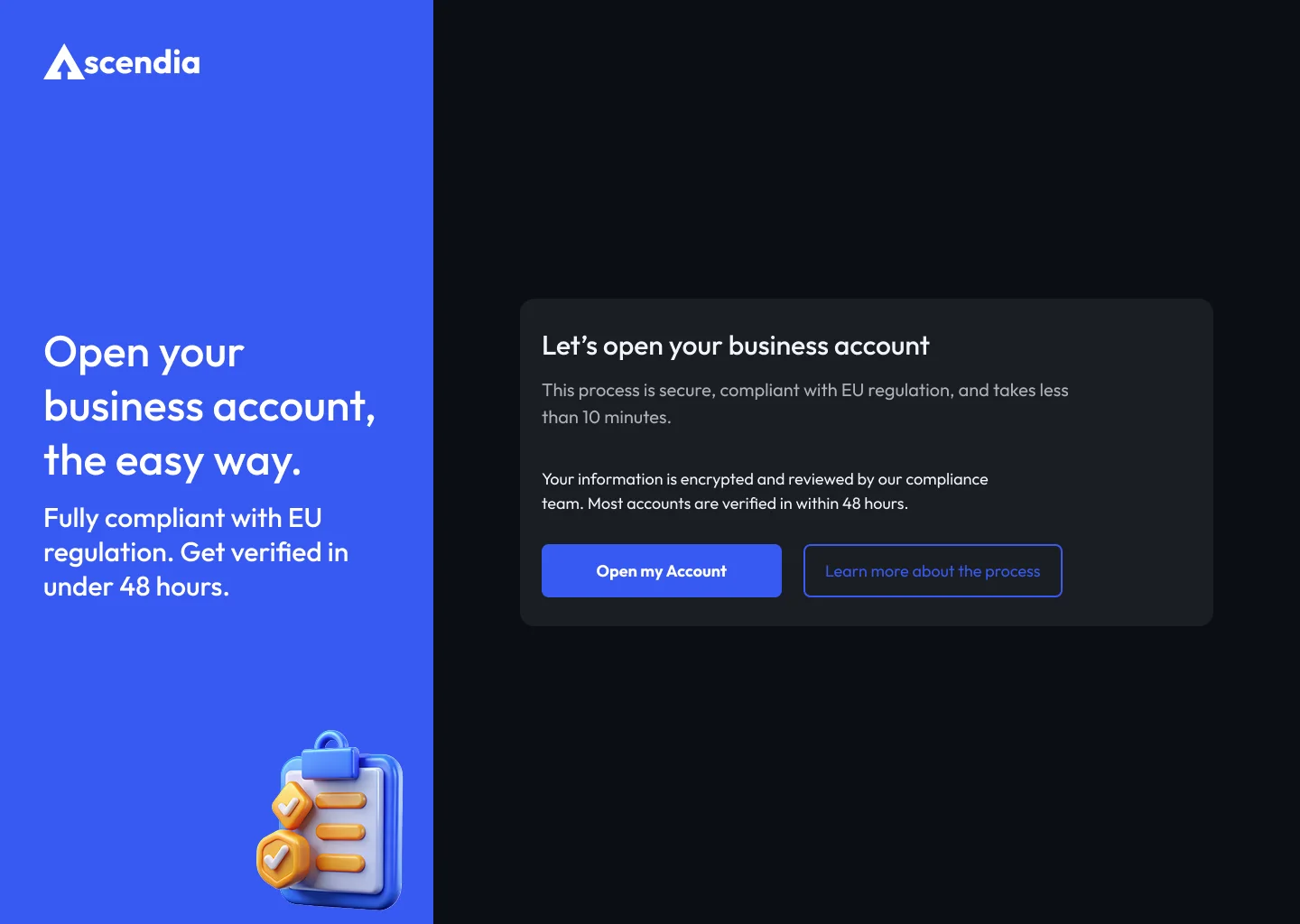
The welcome screen, in dark mode: what happens next, how long it takes, who reviews the file.
02
One screen, one question
The left rail lists the six steps and ticks them off, and each step has its own counter, so the person always knows what is left. Company details come first, because the founder knows them by heart. The owners come next, in a table: everyone who holds more than 25 percent, their role, their share, whether they hold public office, and where their own verification stands. The founder sees at a glance who still has something to send.
Every regulatory request gets one plain sentence beside the field. The screen that asks about politically exposed persons defines them: someone who holds or has held high public office, such as a minister or an ambassador. The question about the source of funds says why the bank needs the answer. And every screen keeps the same way out: save and finish later.
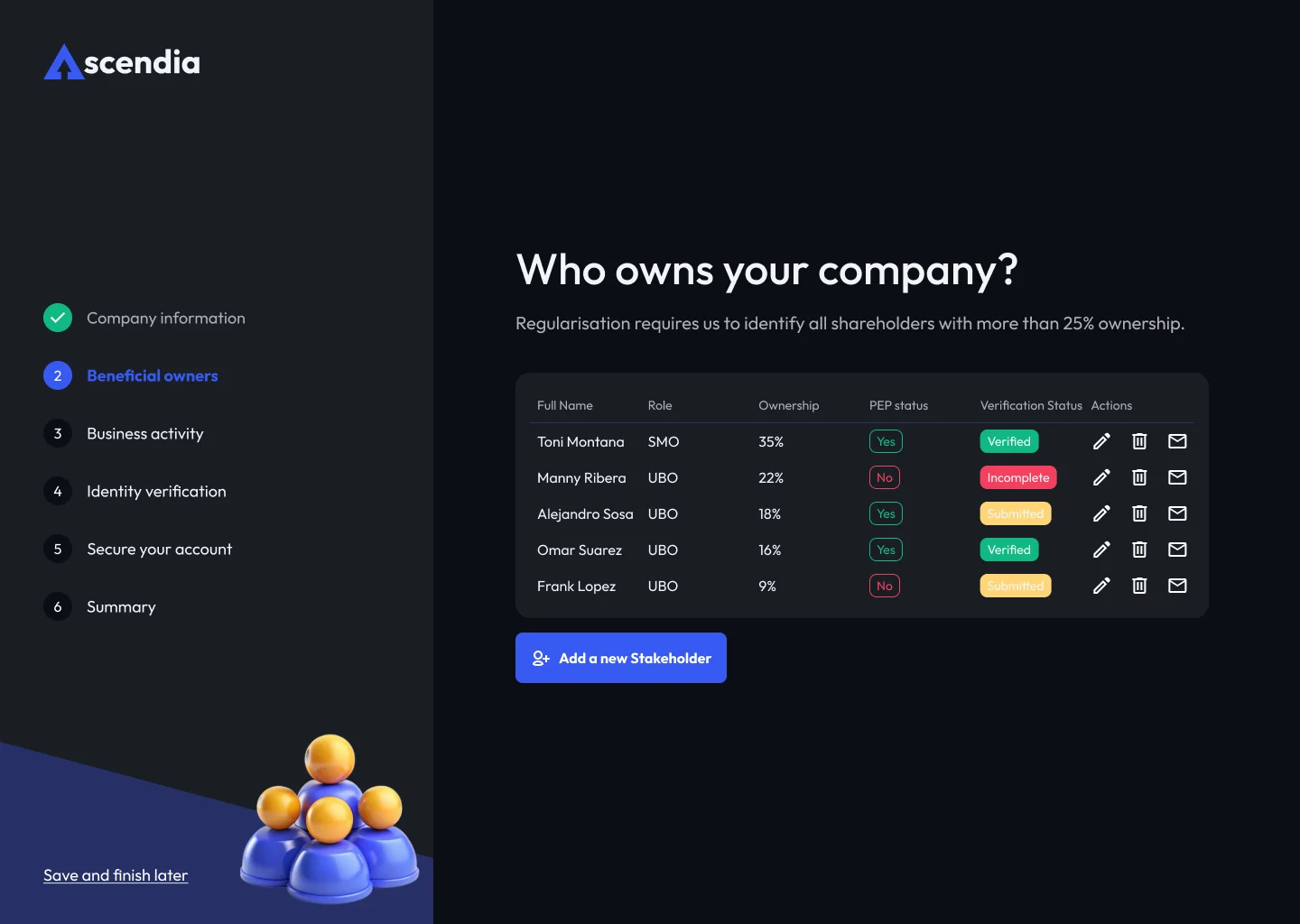
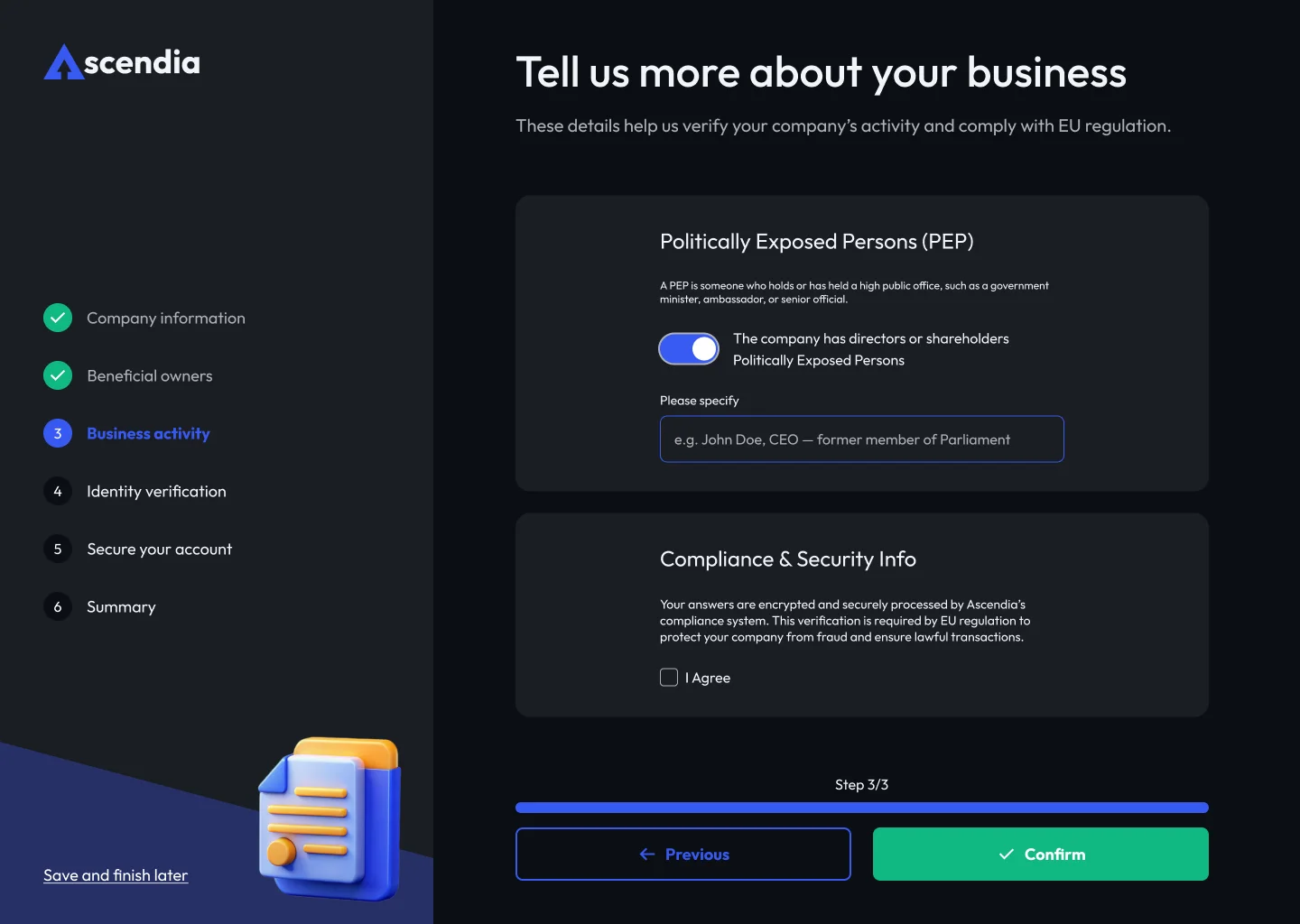
The owners table, with each person's verification status, then the question about public office with its definition on the screen.
03
The identity check happens on a phone
Most people photograph their ID and take the selfie with their phone, so the mobile flow is designed as a sequence of its own. The person picks a document, photographs it, adds a proof of address, then reviews every check before sending. Each check stays editable until the last button.
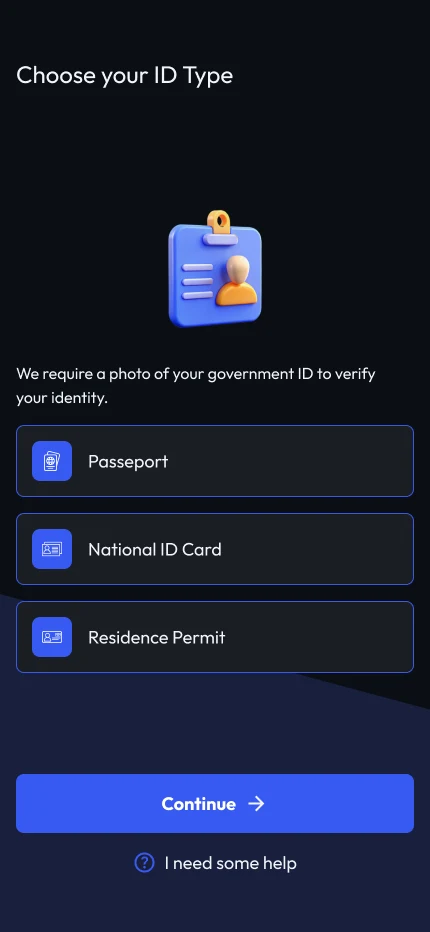
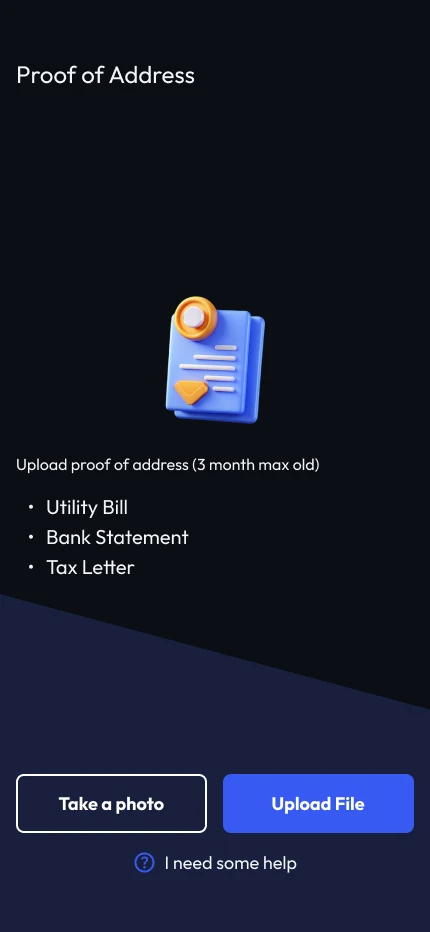
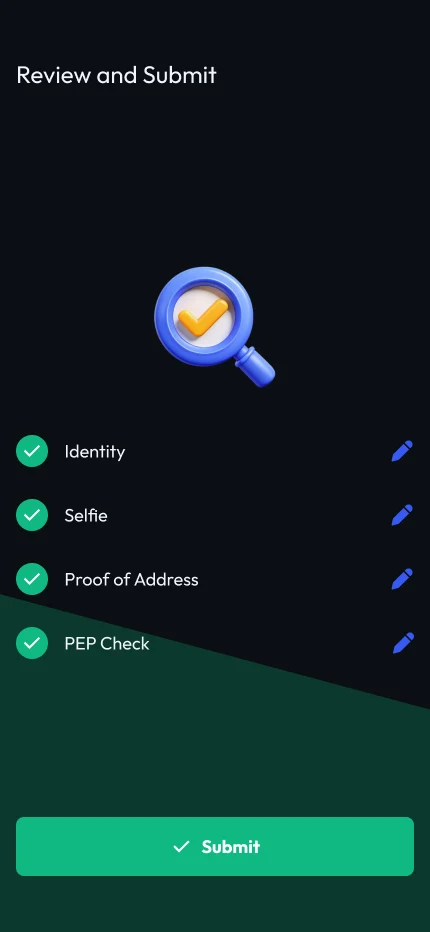
Choosing the document, the proof of address, and the review before sending, where every check can still be edited.
04
Securing the account, then the account itself
Strong customer authentication is the European rule that a payment account needs a second proof of identity on top of the password. The flow offers a text message or an authenticator app, checks the phone number, and confirms in one sentence that the protection is on. Once the file is sent, the account opens on its dashboard: the balance, the cash flow month by month, and the latest transactions.
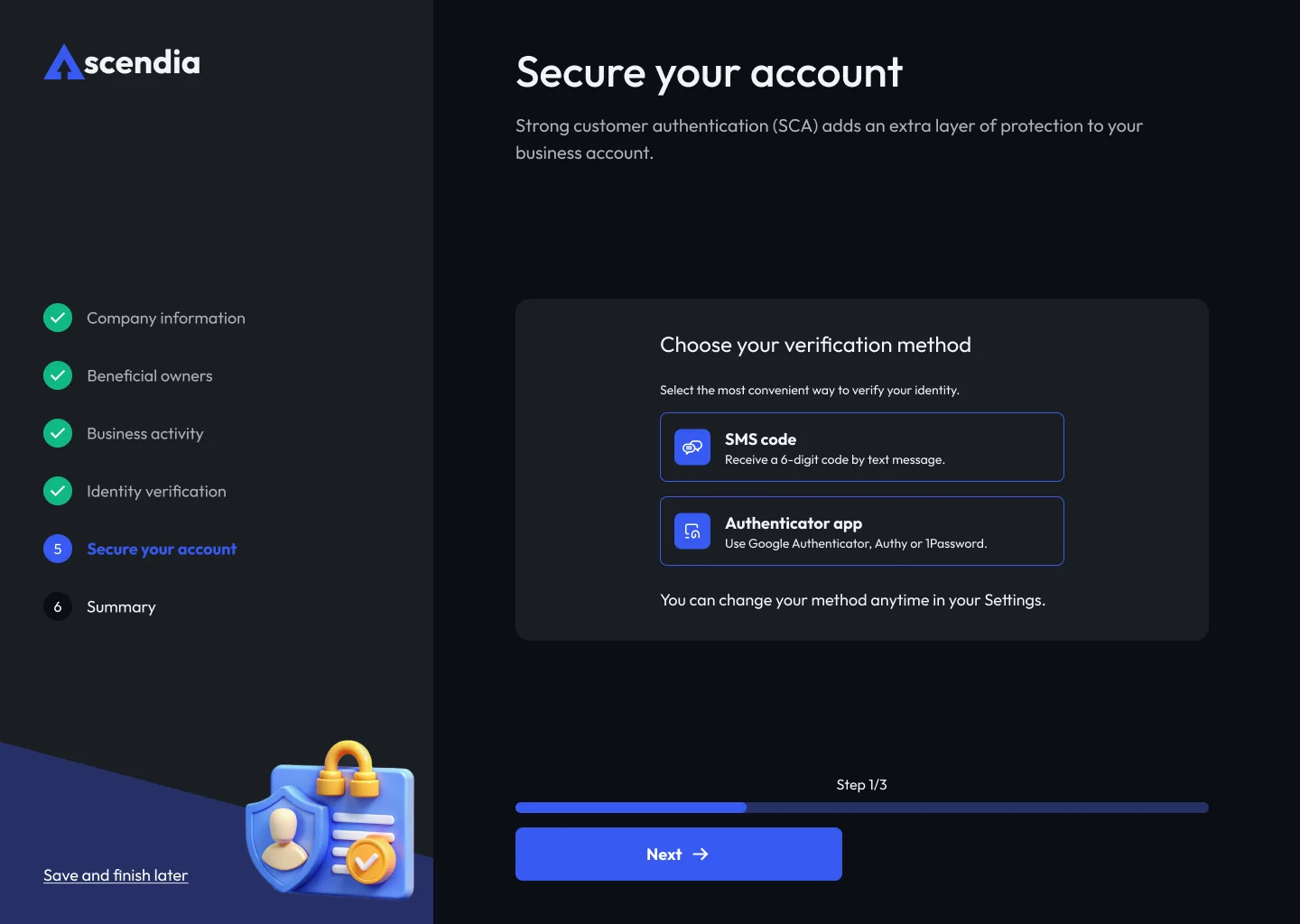
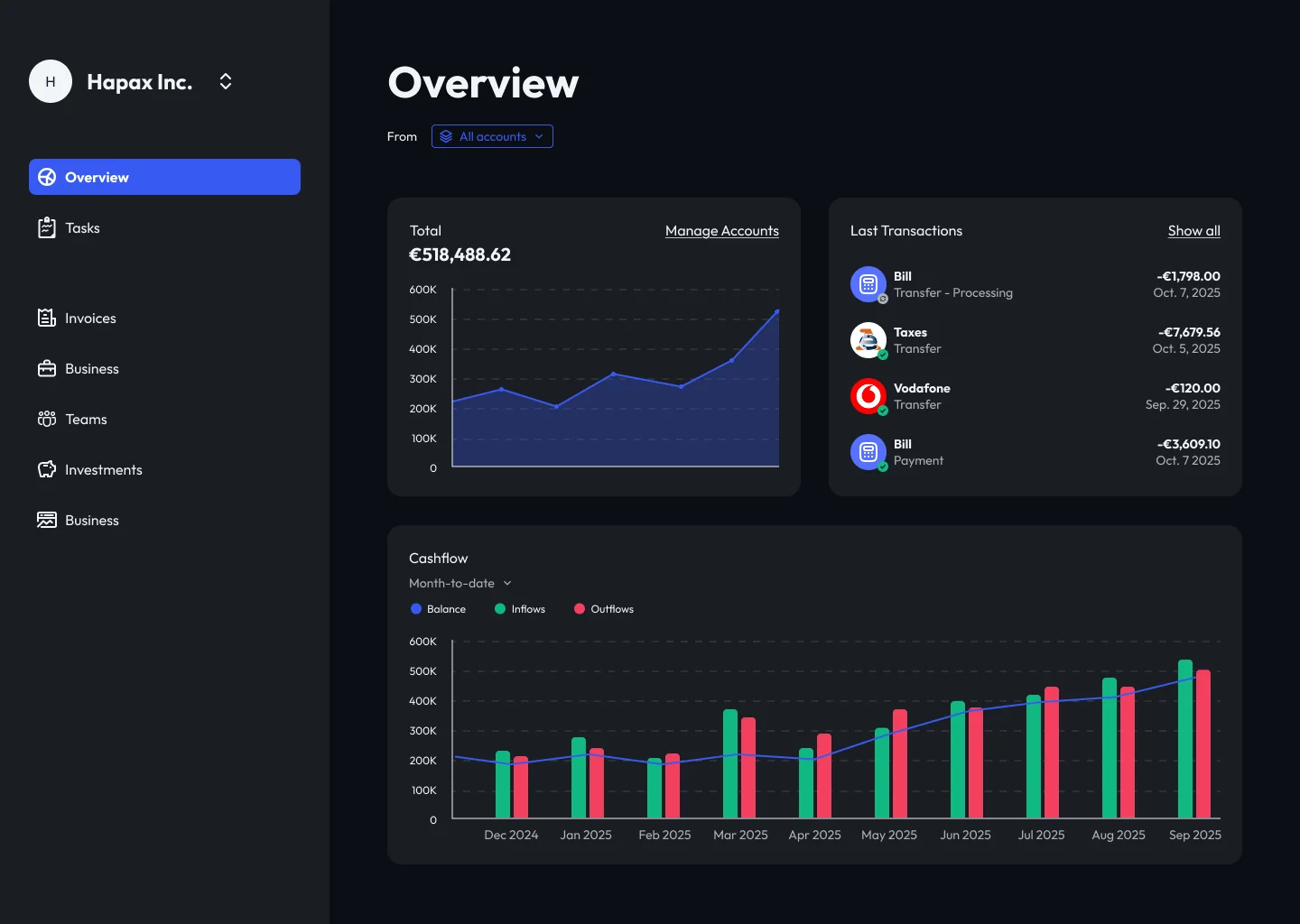
Choosing the second factor, and the account once it is open.